04 74 03 98 80


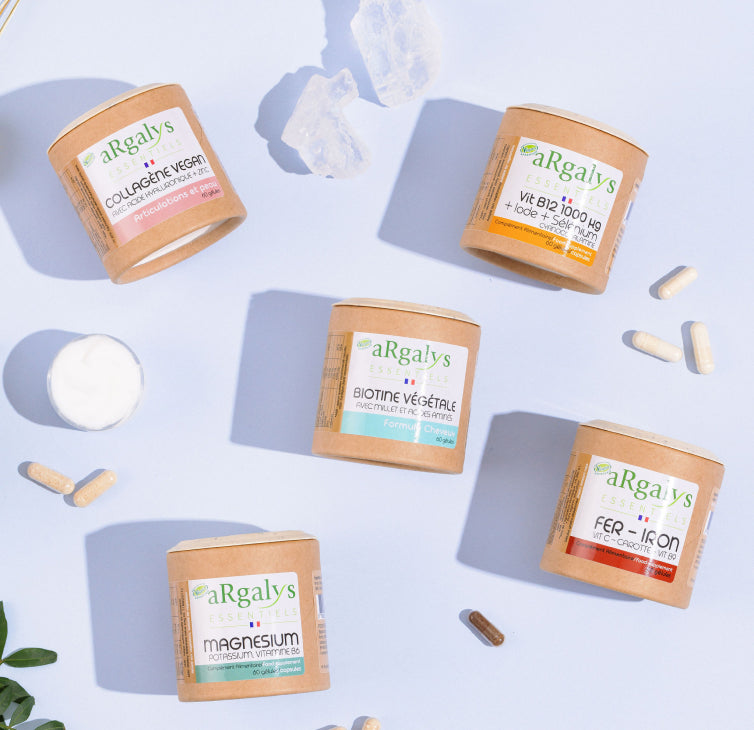
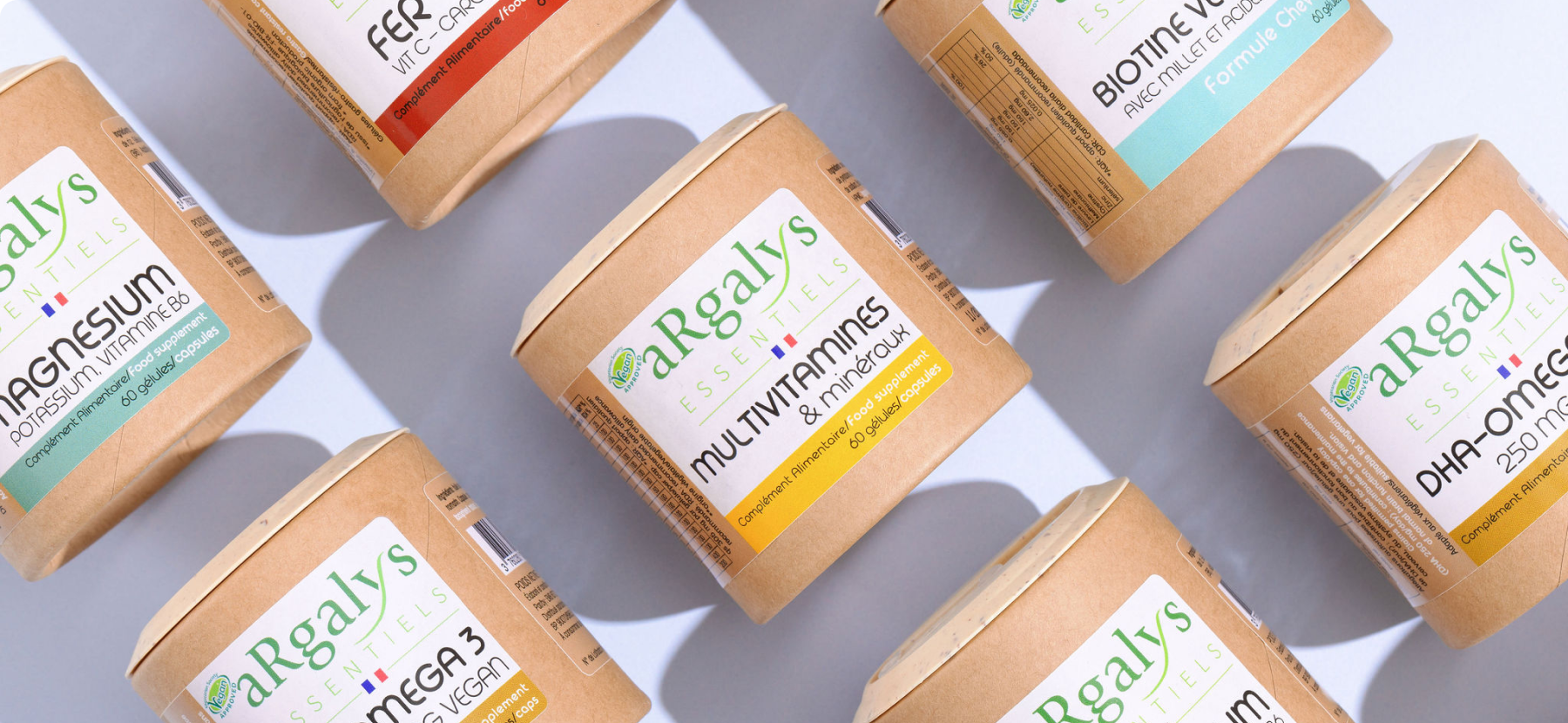



Cream, serum, injection, capsule… Hyaluronic acid comes in many forms.
But among them, oral supplementation remains the least known and the most questioned.
Does the molecule survive digestion? Does it actually reach the skin? And do studies confirm a measurable improvement in hydration?
The question of its oral bioavailability has long divided the scientific community. Clinical studies conducted over the past fifteen years have significantly changed the debate.
In this article, we take a closer look at absorption mechanisms, the available trials and the factors that actually determine the effectiveness of ingested hyaluronic acid.
What is hyaluronic acid?
Discovered in 1934, hyaluronic acid is a carbohydrate-derived molecule that is naturally synthesized by the body. It is found particularly in the skin, the synovial fluid of the joints and the vitreous humor of the eye.
In the dermis, it is a major component of the extracellular matrix, capable of binding up to 1,000 times its weight in water. It is thanks to this property that hyaluronic acid offers benefits for skin and joint health.
Its concentration in the skin decreases significantly with age, by up to 75% between the ages of 20 and 80, contributing to dehydration and visible signs of skin aging (Papakonstantinou et al., 2012, Dermato-Endocrinology).
Good to know
In Argalys formulas, the hyaluronic acid we use is produced through biotechnology (bacterial fermentation). Hyaluronic acid can also be extracted from rooster combs, an option we have obviously chosen not to use.
Is oral hyaluronic acid absorbed by the body?
The first question regarding the effectiveness of ingested hyaluronic acid concerns its bioavailability: can it survive digestion, cross the intestinal barrier and reach the skin and other target tissues?
For a long time, the scientific community was skeptical. Pioneering research by Balogh et al. (2008, Journal of Nutrition) provided an initial answer using radiolabeled hyaluronic acid. Their results showed that a fraction of ingested hyaluronic acid was indeed absorbed through the intestinal mucosa, detected in the plasma and then distributed to different tissues, including the skin.
Subsequent studies have provided further insight into this mechanism. Even high-molecular-weight hyaluronic acid (above 500 kilodaltons) has demonstrated effectiveness.
It first undergoes hydrolysis in the digestive tract, generating oligomers and disaccharides. These smaller fragments cross the intestinal epithelial barrier more easily. Once absorbed, some are reassembled or used as substrates for the endogenous synthesis of HA in target tissues (Asari et al., 2010, Food and Chemical Toxicology).
It is important to note that absolute bioavailability remains moderate, but it is nevertheless sufficient to produce measurable biological effects, as demonstrated by clinical trials.
Does oral hyaluronic acid really hydrate the skin?
What clinical trials have measured
Several rigorous clinical trials have evaluated the impact of oral hyaluronic acid supplementation on skin hydration.
The study by Kawada et al. (2015, Journal of the Science of Food and Agriculture) is one of the most frequently cited. In this trial, 96 adults received either 120 mg/day of hyaluronic acid or a placebo for 12 weeks.
The results showed a significant improvement in skin hydration in the HA group, as well as a reduction in the dry and rough appearance of the skin, confirmed by dermatological assessment.
In another study by Sato et al. (2012, Bioscience, Biotechnology, and Biochemistry), 33 women with dry skin were supplemented with 200 mg/day of low-molecular-weight HA (< 5 kDa) for 6 weeks.
The authors observed a significant increase in stratum corneum hydration and an improvement in skin suppleness, with a more pronounced effect for lower-molecular-weight fragments.
Meta-analyses and systematic reviews
The validity of these findings has been supported by reviews of the scientific literature.
A meta-analysis by Oe et al. (2016, Nutrition Journal) covering 6 randomized controlled trials concluded that oral HA supplementation significantly improved skin hydration and reduced skin dryness in healthy adults.
The authors reported a dose-dependent effect, with optimal results at doses ranging from 120 to 240 mg/day for periods of at least 8 weeks.

How oral hyaluronic acid works on the skin: the two key mechanisms
Two mechanisms explaining the effectiveness of ingested hyaluronic acid have been identified.
First, hyaluronic acid fragments absorbed in the intestine act as precursors: they provide the disaccharides (glucuronic acid, N-acetylglucosamine) required for the endogenous synthesis of hyaluronic acid by fibroblasts (Asari et al., 2010).
This mechanism stimulates the body's own production using externally supplied nutrients.
Second, certain hyaluronic acid fragments bind to receptors on the surface of cells in elastic tissues (fibroblasts). This binding activates signaling that promotes cell proliferation and the production of collagen and hyaluronic acid itself (Ruppert et al., 2008, Matrix Biology).
Dosage, duration and molecular weight: what determines the effectiveness of oral hyaluronic acid
Not all oral hyaluronic acid supplements are equivalent. Several factors determine their effectiveness:
Molecular weight appears to have a relatively limited influence. Hyaluronic acid is a polymer, meaning that it can form very long chains with a high molecular weight, but these chains are easily broken down during digestion. Study results are nuanced. Smaller molecules have better bioavailability, but larger molecules that are fragmented during digestion have also demonstrated biological effectiveness.
Dosage and duration play a key role. Oral intake does not produce miraculous or immediate effects, but rather a slow and gradual response. Skin benefits are generally not observed before 4 to 6 weeks of continuous supplementation, with effects reaching a plateau at around 8 to 12 weeks. Doses below 80 mg/day appear insufficient to produce measurable effects (Oe et al., 2016).
Synergistic combinations can also improve results. Studies have shown that combining oral HA with vitamin C (a cofactor in collagen synthesis) and collagen peptides can enhance its effects on skin hydration and elasticity (Inoue et al., 2016, Nutrients).
These findings directly inspired our Pre-Collagen + Hyaluronic Acid formula.
Key takeaway
A minimum intake of 80 mg/day is required to achieve measurable effects. The first results are observed after 4 to 6 weeks and stabilize at around 8 to 12 weeks.
Is it dangerous to take hyaluronic acid capsules?
Oral hyaluronic acid supplementation has a favorable safety profile.
No significant adverse effects have been reported at the recommended doses (100–200 mg/day) in the available clinical trials.
The few contraindications concern people with certain cancers sensitive to hyaluronic acid (including certain lymphomas), for whom prior medical advice is recommended.
Oral hyaluronic acid: key takeaways
Oral hyaluronic acid supplementation is a promising and scientifically supported approach for improving the hydration of elastic tissues, including the skin, cartilage and venous tissues.
Ingested hyaluronic acid produces measurable biological effects, particularly by stimulating the endogenous synthesis of hyaluronic acid and collagen by fibroblasts.
Available clinical trials show significant improvements in skin hydration at doses starting from 120 mg/day over a minimum period of 8 weeks. This route of administration is increasingly supported as a relevant strategy within evidence-based nutricosmetics.
This is the approach we chose for the formulation of our Pre-Collagen with Hyaluronic Acid. A formula designed to stimulate collagen synthesis while providing 150 mg of hyaluronic acid. A unique combination to hydrate the skin.
Scientific references
- Asari, A. et al. (2010). Oral treatment with hyaluronan of average molecular weight 800 kDa induces antinociception via a CB1 cannabinoid receptor–mediated pathway in diabetic mice with neuropathic pain. Food and Chemical Toxicology, 48(10), 2680–2689.
- Balogh, L. et al. (2008). Absorption, uptake and tissue affinity of high-molecular-weight hyaluronan after oral administration in rats and dogs. Journal of Agricultural and Food Chemistry, 56(22), 10582–10593.
- Inoue, N. et al. (2016). Ingestion of bioactive collagen hydrolysates enhance facial skin moisture and elasticity and reduce skin ageing in young Japanese women. Nutrients, 8(11), 697.
- Kawada, C. et al. (2015). Ingested hyaluronan moisturizes dry skin. Journal of the Science of Food and Agriculture, 95(11), 2195–2201.
- Oe, M. et al. (2016). Oral hyaluronan relieves knee pain: a review. Nutrition Journal, 15(1), 11. (compiled data including skin parameters)
- Papakonstantinou, E. et al. (2012). Hyaluronic acid: A key molecule in skin aging. Dermato-Endocrinology, 4(3), 253–258.
- Ruppert, S.M. et al. (2008). Hyaluronan fragments as regulators of inflammation and immunity. Matrix Biology, 27(7), 593–601.
- Sato, T. et al. (2012). Oral intake of hyaluronan relieves wrinkles and improves dry skin conditions in humans: a randomized, double blind, placebo-controlled study. Bioscience, Biotechnology, and Biochemistry, 76(7), 1409–1413.
- Tashiro, T. et al. (2012). Oral administration of polymer hyaluronic acid alleviates symptoms of knee osteoarthritis: a double-blind, placebo-controlled study over a 12-month period. Journal of New Remedies & Clinics, 61(1), 3–14.