04 74 03 98 80



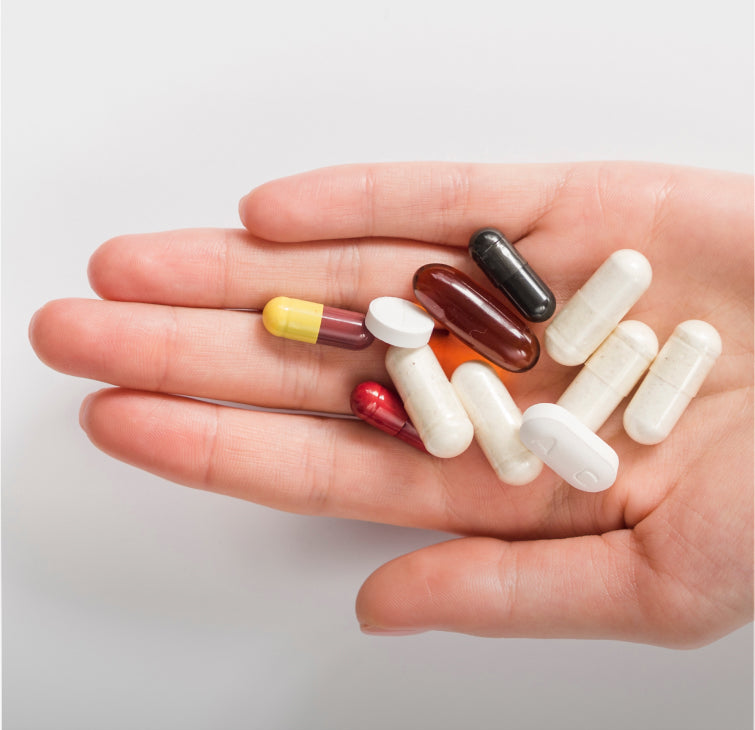




Magnesium bisglycinate is now one of the most widely used forms of magnesium in dietary supplements designed for stress, fatigue or sleep.
Its good digestive tolerance and high bioavailability have led it to gradually replace the more traditional form of marine magnesium, which mainly consists of magnesium oxide.
In practice, magnesium oxide has a very high magnesium content (around 60%, compared with 10 to 20% for bisglycinates), but it is less efficiently absorbed when consumed at high doses.
These unabsorbed magnesium oxide residues in the large intestine can cause diarrhea.
These digestive issues have led to the use of other forms of magnesium that are less concentrated but better absorbed and therefore less likely to cause digestive issues, such as magnesium bisglycinate or magnesium malate.
However, bisglycinates are available with different concentrations of magnesium. Below, we explain why these differences exist and the advantages and disadvantages of each option.
Magnesium bisglycinate is produced through chemical synthesis
Magnesium bisglycinate does not occur naturally, it is manufactured industrially.
It is a so-called chelated form, meaning it combines a mineral molecule with an organic molecule. In this case: magnesium and glycine (the main amino acid found in collagen).
This magnesium chelate has two advantages:
First, the stability of the molecule allows it to maintain its properties for several years and, above all, to withstand stomach acidity after ingestion. This enables better intestinal absorption.
Second, it has good bioavailability of around 70 to 80% (compared with 10–30% for magnesium oxide). This is linked to its ability to use several types of transport mechanisms to cross the intestinal barrier.
The small amount of residue left in the large intestine explains the absence of disruptive digestive effects!
However, the bisglycinate form has one disadvantage: its low concentration of elemental magnesium.
How is magnesium bisglycinate produced?
Magnesium bisglycinate is produced through a reaction between magnesium oxide and glycine (an amino acid), in an aqueous solution at a relatively high temperature (70–80°C).
Why do traces of magnesium oxide remain?
The chelation reaction is slow. It requires several hours and continuous stirring of the solution.
Under industrial conditions, where large volumes are processed, the average overall yield is around 90% with a balanced ratio of the two reactants: 90% of the magnesium oxide and glycine are consumed and transformed/chelated into magnesium bisglycinate.
In the vast majority of cases, traces of the initial substrate (magnesium oxide) therefore remain in the bisglycinate.
The theoretical magnesium content of bisglycinate is 15 to 17% (the variation depends on whether an anhydrous form is present), but even at this balance, some magnesium oxide remains in the final product, at around 10%.

How can magnesium bisglycinate be made without magnesium oxide?
The process is well known in chemistry: it simply involves using a lower proportion of the targeted reactant, which then becomes the limiting reactant in the final reaction.
In other words, to prevent unreacted magnesium oxide from remaining in the final product, less oxide is deliberately used at the start of the reaction. The oxide then becomes the “limiting factor”: it is completely consumed during chelation with glycine.
The trade-off is the possible presence of pure, non-chelated glycine and a final product that generally contains only around 10% elemental magnesium.
This is the main limitation of this approach: a low magnesium concentration, requiring larger doses to meet daily requirements.
In practice, with magnesium bisglycinate containing 10% elemental magnesium, around 3 grams of bisglycinate are needed, which represents nearly 6 capsules per day.
What is buffered magnesium?
Strictly speaking, the term “buffering” refers to a chemical technique used to stabilize the pH of a solution, meaning that it limits changes in acidity.
However, in the dietary supplement industry, the term “buffered magnesium” is used more broadly.
It refers to an imbalance in the proportions of the original reactants (oxide and glycine) designed to increase the magnesium content of the final product by increasing the proportion of oxide at the start of the reaction.
Two very different practices behind the term “buffered”
When discussing magnesium bisglycinate, it is important to distinguish between two very different situations:
-
In the first case, the reactants are mixed in proportions designed to obtain 20% total elemental magnesium at the end of the chelation reaction. This practice is accepted by regulatory authorities.
-
In the second case, an additional amount of free magnesium oxide is added after the reaction (post-reaction buffering) to increase the percentage of magnesium displayed on the label. This practice is more questionable and should be specifically indicated on the label.
Magnesium oxide in bisglycinate: should you be concerned?
The presence of magnesium oxide in magnesium bisglycinate is linked to the manufacturing process itself. Achieving 100% complete chelation is technically very difficult under industrial conditions.
It is possible to produce forms that are almost completely chelated, with close to 99% purity. However, this requires significantly reducing the amount of magnesium used at the start of the reaction. The final product then contains much less elemental magnesium, generally around 10%, which means that more capsules must be taken to obtain an adequate intake.

Why is magnesium oxide problematic at high doses?
What really matters is not simply the presence of magnesium oxide, but the final amount in the product.
Magnesium oxide is also widely used on its own in many dietary supplements, particularly under the name “marine magnesium.” Its main drawback occurs primarily at high doses.
Unlike bisglycinate, magnesium oxide relies on passive transport in the intestine, which can quickly become saturated. When the amounts become too high, generally above 500 mg per day, some of the magnesium remains in the intestine. This unabsorbed magnesium draws water into the colon and can cause digestive issues or even diarrhea.
In bisglycinates containing 15 or 20% magnesium, the residual proportion of oxide remains low. For a 20% form, it is estimated that around 80% of the magnesium is chelated and 20% comes from free forms such as oxide or hydroxide.
At these low doses, magnesium oxide is generally well tolerated and properly absorbed. It can even increase the total amount of magnesium absorbed per dose.
This is a significant advantage, as it can almost halve the number of capsules required for a given dose.
The table below summarizes the practical differences between the main concentrations of magnesium bisglycinate.
|
Final magnesium content |
% of chelated magnesium (± 5%) |
Other compounds in the final product |
Amount of magnesium absorbed per 100 mg of ingredient ** |
|
10% |
99% |
Traces of oxide, glycine |
7 mg |
|
15% |
90% |
10% oxide, hydroxide, glycine |
9.60 mg (+37%)* |
|
20% |
80% |
20% oxide, hydroxide, glycine |
11.6 mg (+65%)* |
*% compared with the 10% form **assumed intestinal absorption: oxide: 10% (doses below 100 mg); bisglycinate: 70%
The 20% form provides 65% more absorbed magnesium than the 10% form.
What you need to know about magnesium bisglycinate
The manufacturing process for magnesium bisglycinate normally results in residual magnesium oxide being present in the final product.
The form containing 10% magnesium has a proportion of chelates close to 100%. It is the preferred option for people with significant intestinal sensitivity resulting from medical conditions or treatments (Crohn's disease, chemotherapy, IBS, etc.). The trade-off is its limited magnesium content.
Forms containing 15 or 20% have lower proportions of chelates, but provide a higher total amount of absorbed magnesium, without the risk of intestinal discomfort when taken in amounts suited to daily requirements.
References
- Case D.R., Gonzalez R., Zubieta J., Doyle R.P. (2021). Synthesis, Characterization, and Cellular Uptake of a Glycylglycine Chelate of Magnesium. ACS Omega. DOI: 10.1021/acsomega.1c04146 PMID: 34926895 — PMC8679001
- Case D.R., Zubieta J., Gonzalez R., Doyle R.P. (2021). Synthesis and Chemical and Biological Evaluation of a Glycine Tripeptide Chelate of Magnesium. Molecules, 26(9), 2419. DOI: 10.3390/molecules26092419 PMID: 33919285 — PMC8122334
- https://www.benchchem.com/synthesis/pse-2816g9889fe74060c14625313b9d79gg
- Rosanoff A, Weaver CM, Rude RK. Magnesium and public health: the impact of the current dietary intake on disease risk in the United States. Nutrition Reviews. 2012;70(3):153-164.
- DiNicolantonio JJ, O’Keefe JH, Wilson W. Magnesium in clinical medicine. Journal of the American College of Nutrition. 2018;37(3):245-260.
- EFSA Panel on Dietetic Products, Nutrition and Allergies. Scientific opinion on dietary reference values for magnesium. EFSA Journal. 2015;13(7):4186.
- Firoz M, Graber M. Bioavailability of US commercial magnesium preparations. Magnesium Research. 2001;14(4):257-262.
- Schuchardt JP, Hahn A. Intestinal absorption and factors influencing bioavailability of magnesium—an update. Current Nutrition & Food Science. 2017;13(4):260-278.