04 74 03 98 80







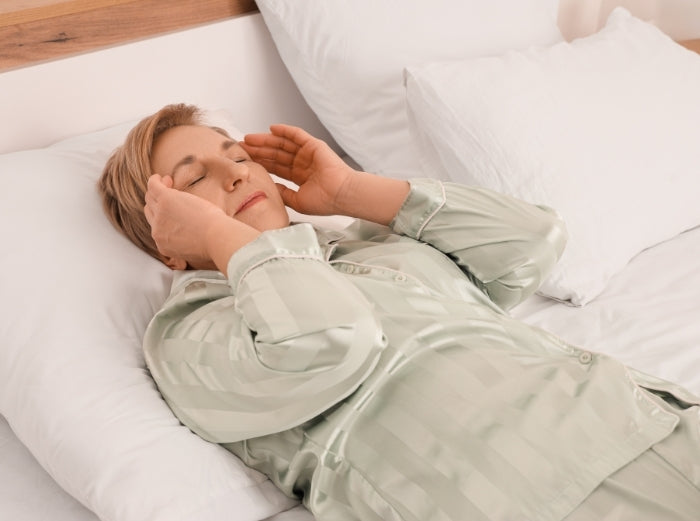
You have been sleeping less well for the past few months. Your periods arrive unexpectedly, earlier or later than usual. A sudden wave of heat spreads across your face in the middle of a meeting, for no apparent reason. These signs often go unnoticed or are attributed to stress, fatigue or lifestyle. Yet in mature women, they can have a specific hormonal cause.
Menopause is a normal and natural biological transition in women, linked to age and an estrogen deficiency that gradually becomes permanent over several years.
Menopause does not happen overnight. It can begin to show signs several years in advance, through a wide range of symptoms affecting both the body and mind. Recognizing them early means being able to take action at the right time, before symptoms become more intense and have a lasting impact on quality of life.
Here are the 10 early signs to know, the biological mechanisms behind them explained simply, and what they can tell you about your hormonal transition.
When do the first signs of menopause appear?
The first signs of menopause do not suddenly appear at age 51 (the average age of menopause). They begin much earlier, sometimes as early as your 40s, during a transitional stage known as premenopause or perimenopause.
This stage is characterized by increasing hormonal instability. The ovaries continue to function but produce increasingly irregular amounts of estrogen and progesterone.
It is these erratic fluctuations, rather than simply declining hormone levels, that trigger the first symptoms [1]. The body reacts to hormonal unpredictability even before hormone levels permanently decline.
According to Inserm, 87% of menopausal women experience at least one bothersome symptom beyond the end of menstruation [2]. Most of these symptoms appeared well before this stage.
Key takeaway: The first signs of menopause appear on average four to eight years before periods stop permanently. Recognizing them during perimenopause makes it possible to anticipate changes and adapt your approach accordingly.
A simple hormone test measuring FSH and estradiol can help confirm the beginning of the menopausal transition. The French National Authority for Health (HAS) does not recommend routine testing after age 45, but it can still be useful when there is uncertainty before this age or to distinguish perimenopause from another cause [2].
The 10 early signs of menopause
These 10 signs do not all appear at the same time or with the same intensity in every woman. Some begin during perimenopause, while others develop gradually as hormone deficiency becomes more pronounced.
Every individual situation is different, which is why seeking medical advice can be valuable as soon as the first symptoms appear. Your doctor can assess your overall situation to establish a diagnosis and recommend appropriate care.
1. Irregular periods
Menstrual cycles change. This is the first and often earliest sign of the menopausal transition.
The ovaries gradually reduce their follicular activity. Progesterone, whose production depends directly on ovulation, becomes erratic. Estrogen levels fluctuate unpredictably. These imbalances disrupt the menstrual cycle as a whole and change the frequency, duration and flow of periods [3].
Most women experience changes in their menstrual cycle for four to eight years before menopause [3]. For 10% of women, the transition occurs through a sudden end to menstruation without any previous irregularities.
Science fact: According to a clinical fact sheet from the Réseau québécois d'action pour la santé des femmes (RQASF), disrupted ovulation leads to a decrease in progesterone production, initially shortening the menstrual cycle. The subsequent decline in estrogen then makes periods lighter before they eventually stop completely [3].
2. Hot flashes
Hot flashes are the most characteristic sign of menopause. They can begin during perimenopause, well before periods stop.
The decline in estrogen disrupts the hypothalamus, the region of the brain responsible for regulating body temperature. This can trigger sudden cutaneous vasodilation. An intense wave of heat spreads across the face, neck and chest, often followed by sweating and chills [4].
Hot flashes affect 60% to 80% of women during the menopausal transition [2]. A hot flash generally lasts two to four minutes but can occur several times per hour in severe cases.
3. Night sweats
Night sweats are essentially hot flashes that occur at night. They are one of the first signs that can indicate a hormonal transition.
The mechanism is the same as for daytime hot flashes. The disinhibition of hypothalamic neurons causes cutaneous vasodilation during sleep. The resulting sweating can be heavy enough to require changing clothes or bed sheets during the night [4].
Insomnia is one of the most frequently reported symptoms during the menopausal transition, with a prevalence of 50% in recent epidemiological studies [5]. Night sweats are one of its direct causes, triggering repeated awakenings that fragment sleep.
4. Sleep disturbances
Sleep quality declines. This is one of the earliest signs to appear and one of the most disruptive in everyday life.
Two distinct mechanisms explain this disruption. Night sweats cause repeated awakenings. The decline in progesterone, a hormone with natural sedative properties that acts on GABA-A receptors in the brain, deprives the body of important support for falling asleep and maintaining deep sleep [1]. This is compounded by increased cortisol associated with estrogen deficiency, which keeps the nervous system in a heightened state of alert even in the evening.
Fatigue resulting from sleep disturbances affects nearly 48% of women during the menopausal transition and is among the most frequently reported symptoms in studies conducted between 2023 and 2025 [5].
5. Mood swings and irritability
Mood becomes more unstable. Episodes of irritability, anxiety or sadness may occur for no apparent reason.
These symptoms have a specific neurobiological basis. Estradiol, the main form of estrogen, directly modulates the brain's serotonergic and dopaminergic pathways, two systems involved in regulating mood and motivation [6]. Fluctuations in estradiol disrupt these systems even before levels remain consistently low. Erratic fluctuations can often be more disruptive than a gradual, continuous decline.
Nervousness and mood swings affect nearly 47% of women during the menopausal transition, according to recent epidemiological data [5].
6. Brain fog
Memory becomes less reliable. Words are harder to find. Concentration becomes more difficult.
These cognitive symptoms are among the early signs of menopause and are often some of the least well explained to women experiencing them.
Estradiol has a neuroprotective role in hippocampal neurons, which are involved in short-term memory and information processing speed. Progressive fluctuations in estradiol disrupt these cognitive functions even before periods stop [6]. The sleep disturbances that accompany this period can further worsen mental fatigue.
Difficulties with short-term memory and concentration are among the subjective cognitive symptoms documented in women during the menopausal transition. They have been reported in several epidemiological and clinical studies [7].
Science fact: GEMVi (the French Study Group on Menopause and Hormonal Aging) states that estrogen deficiency is suspected of contributing to declining cognitive function after menopause, particularly memory and verbal performance [2].
7. Persistent fatigue
Fatigue becomes persistent. It does not disappear after a night's rest and feels different from ordinary tiredness.
This chronic fatigue results from several combined mechanisms. Sleep disturbances prevent adequate nighttime recovery. Estrogen deficiency reduces serotonin production, which is involved in regulating energy and vitality. Increased cortisol keeps the body in a state of chronic alertness, gradually depleting energy reserves [6].
Fatigue affects nearly 48% of women during the menopausal transition and was among the three most frequently reported symptoms in epidemiological studies conducted in China in 2023 and 2024, after insomnia [5].
8. Vaginal dryness
Intimate comfort changes. Dryness or irritation may appear, sometimes accompanied by pain during sexual intercourse.
Vaginal tissues contain a high density of estrogen receptors. When estradiol levels decline, the vaginal lining becomes thinner and loses its suppleness and natural lubrication. Protective vaginal flora also decreases, increasing the risk of irritation and infection [8]. This is part of genitourinary syndrome of menopause (GSM).
Vaginal dryness affects around 50% of menopausal women [8]. Unlike hot flashes, which tend to decrease over time, this symptom progressively worsens without appropriate care. It can begin during perimenopause.
9. Decreased libido
Sexual desire decreases. This change is often experienced as a difficult-to-define loss and is rarely discussed spontaneously during medical consultations.
Several mechanisms are involved. Declining estrogen and testosterone levels — testosterone is present in smaller amounts in women but plays an important role in sexual desire — alter the central sexual response. Vaginal dryness can make intercourse painful, creating negative anticipation that gradually inhibits desire. Sleep disturbances, fatigue and mood swings also reduce emotional availability [1].
Decreased libido is one of the least discussed symptoms during medical consultations, even though it can significantly affect quality of life and relationships for many women during the menopausal transition. It is nevertheless reported by a large majority of women in dedicated qualitative studies.
10. Headaches and heart palpitations
Unusual headaches or sensations of a racing heart may occur. These physical signs are less well known but are directly linked to hormonal fluctuations.
Sudden changes in estrogen influence vascular tone by altering the production of nitric oxide, a natural vasodilator in the arteries. These abrupt fluctuations can trigger vascular headaches in women who are predisposed to them [6]. Palpitations result from the effects of estrogen on the autonomic nervous system, which regulates heart rate. Hormonal instability can cause a temporary increase or irregularity in heart rate.
These temporary cardiovascular symptoms, which are often poorly identified, are part of the clinical picture of perimenopause. They generally disappear as hormone levels stabilize or with appropriate care [7].
Are these signs always related to menopause?
Some symptoms are not specific to menopause and may indicate other causes that are important to rule out.
Heavy or irregular bleeding may indicate fibroids, polyps or, more rarely, endometrial conditions. Severe fatigue combined with weight gain may suggest hypothyroidism. Recurrent palpitations warrant a cardiovascular assessment. Persistent cognitive symptoms may have other neurological causes.
The rule is simple. If one or more symptoms concern you, are severe or appear suddenly, consult a doctor.
Key takeaway: Experiencing several of these signs at the same time between the ages of 45 and 55 strongly suggests the menopausal transition. Outside this age range, or if there is any uncertainty, medical advice is recommended.
Key takeaway: Experiencing several of these signs at the same time between the ages of 45 and 55 strongly suggests the menopausal transition. Outside this age range, or if there is any uncertainty, medical advice is recommended.
How can you relieve the early signs of menopause?
Identifying the early signs also means being able to take action before symptoms worsen. Several complementary approaches can help reduce their impact from perimenopause onward.
Regular physical activity is one of the best-documented interventions. It can reduce the frequency of hot flashes, improve sleep quality and support emotional balance.
→ Read our article: Menopause — symptoms, causes and hormone-free solutions
Cognitive behavioral therapy (CBT) has shown significant effectiveness for vasomotor symptoms and sleep disturbances in randomized controlled trials. It works by changing the perception of symptoms and their emotional impact.
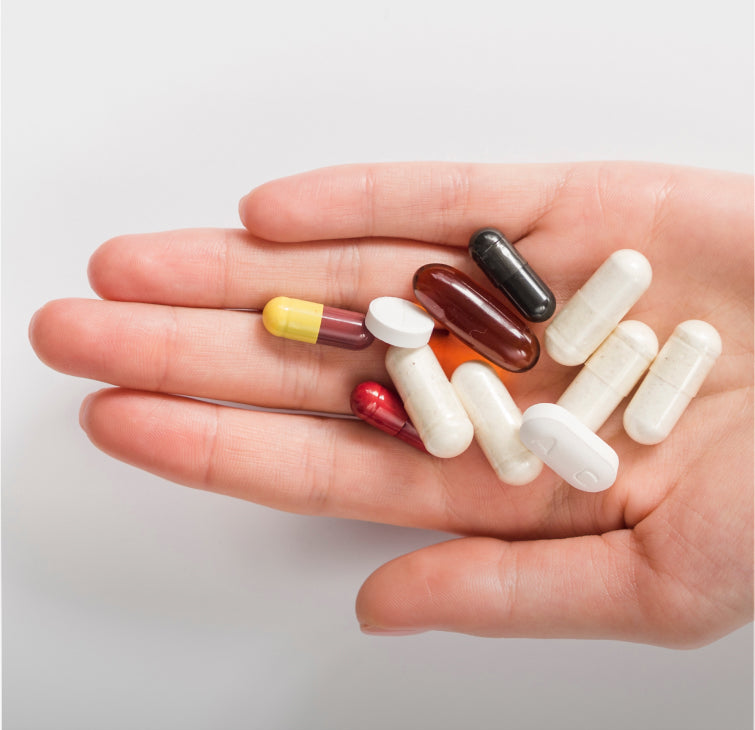
From a nutritional perspective, targeted supplementation without hormonal effects can help relieve some of the most disruptive symptoms (nervousness, anxiety, hot flashes).
At Argalys, we have formulated a supplement without phytohormones or direct hormonal effects, combining active ingredients to support women from the earliest signs of the menopausal transition and throughout the three stages that follow.
Magnesium bisglycinate supports the nervous system and sleep quality.
L-theanine promotes relaxation without sedation. Saffron (Activ'Inside® extract) modulates serotonergic pathways involved in mood and sleep.
Fenugreek reduces hot flashes and other symptoms through mechanisms that are currently not fully understood but have been well observed.
Vitamins B6, B12, D3 and E complete this approach by supporting fatigue reduction, the nervous system and bone health.
When symptoms are particularly severe or disabling, a doctor may also prescribe hormone replacement therapy (HRT).
HRT can help reduce the impact of hormonal changes for a defined period (two years on average, up to a maximum of five years).
What you need to know about the early signs of menopause
The early signs of menopause are often subtle, varied and easily attributed to other causes.
Irregular periods, hot flashes, night sweats, sleep disturbances, mood swings, brain fog, fatigue, vaginal dryness, decreased libido, headaches or palpitations: these 10 symptoms form a consistent clinical picture directly linked to the hormonal fluctuations of perimenopause.
The sooner you understand what is happening in your body and which stage of menopause you are in, the sooner you can make adjustments that can make a real difference in your daily life.
References
[1] MSD Manuals Professional. Ménopause. Revised July 2023, modified January 2024. doi:10.1097/GME.0000000000002187
[2] Inserm. Ménopause. Dossier d'information, 2023. Available at: inserm.fr — Rapport parlementaire Stéphane Rist, April 2025. — Fondation pour la Recherche Médicale (FRM), source GEMVi. Available at: frm.org
[3] Réseau québécois d'action pour la santé des femmes (RQASF). Fiche 3.2.2 : Les irrégularités du cycle en préménopause. Available at: rqasf.qc.ca
[4] Rance NE, et al. Neurokinin B signalling and the regulation of body temperature. Prog Brain Res. 2010;182:301-17.
[5] China CDC Weekly. Prevalence and Severity of Menopausal Symptoms in Women of Different Ages — China, 2023–2024. China CDC Wkly. 2025 Mar 7;7(10):334-340. doi:10.46234/ccdcw2025.054
[6] Davezac M et al. The different natural estrogens promote endothelial healing through distinct cell targets. JCI Insight. 2023;8:e161284. doi:10.1172/jci.insight.161284
[7] Diarra LS. Étude épidémiologique et clinique de la période de ménopause au centre de santé de référence de la commune V du district. Université de Bamako, 2009. Cited in: Therafemina. Préménopause et ménopause : les 34 signes à connaître, July 2025.
[8] International Menopause Society (IMS). Recommandations pour la prise en charge de l'atrophie vulvo-vaginale, 2010. — Dermomedicalcenter.com. Sécheresse vaginale : causes, symptômes et traitements, 2024.
[9] Bienvivrelamenopause.fr. Signes de la ménopause : les reconnaître et les comprendre. Sources: HAS 2025, CNGOF-GEMVi 2021, ESHRE 2024. Updated May 2026.