04 74 03 98 80





Saffron is the most expensive spice in the world by weight. It is also one of the most extensively studied plants for its effects on mood, sleep and anxiety.
During menopause, when all three of these areas are simultaneously affected by declining estrogen levels, scientific interest in saffron is particularly relevant.
However, not all saffron is equal, and not all studies use the same extracts. Here is what the science really says, including the results, nuances and limitations.
What is saffron?
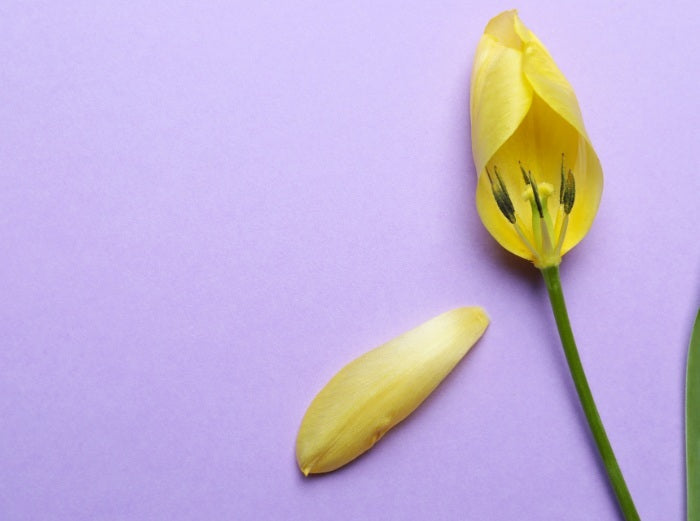
Saffron is a spice obtained from the stigmas (the dried pistils) of the Crocus sativus flower.
It takes around 150,000 flowers to produce one kilogram of saffron, which explains its high price and the prevalence of fraud on the market [1]. Saffron has been cultivated for centuries, mainly in Iran, which accounts for more than 90% of global production.
Composition and active compounds
Saffron contains more than 150 molecular compounds.
Three active compounds account for most of its biological interest. Crocin is the red carotenoid pigment characteristic of saffron. It plays a role in serotonin regulation and has powerful antioxidant properties [2].
Safranal is the volatile compound responsible for saffron's floral aroma. Its effects on sleep and mood through serotonergic pathways are well documented in the scientific literature [3].
Picrocrocin, a precursor of safranal, contributes to its anti-inflammatory properties and characteristic bitter taste.
The bioavailability of raw crocin is low, estimated at 18 to 22% according to recent pharmacokinetic studies, which explains the interest in standardized, concentrated extracts to achieve improved and measurable effects [2].

Why is saffron of interest in menopause research?
Saffron is of interest in menopause research for one specific reason.
During menopause, declining estrogen levels directly disrupt serotonin production, which is involved in regulating mood, sleep and thermoregulation [4]. Saffron acts on these same neurochemical pathways without having a direct hormonal effect. This non-hormonal mechanism makes it a particularly interesting option for women seeking a natural approach without phytoestrogens.
More than 35 clinical trials on saffron have been published over the past 20 years, making it one of the most extensively studied plants in nutraceutical research [3].
How does saffron affect menopause symptoms?
Saffron acts on menopause symptoms through three complementary biological pathways.
Effects on serotonergic pathways and mood
Saffron directly modulates the availability of serotonin (the happiness hormone) in the brain.
Crocin and safranal increase the availability and duration of action of serotonin by acting on nerve endings (synapses) [3]. This mechanism is similar to that of SSRI antidepressants (selective serotonin reuptake inhibitors), but with a gentler action profile and fewer documented adverse effects. Crocin also acts on dopamine and norepinephrine, two neurotransmitters involved in motivation and stress management [1].
During menopause, declining estrogen levels reduce serotonin production, and this neurochemical support provided by saffron helps explain the observed effects on mood and irritability.

Effects on sleep and anxiety
Saffron improves sleep quality through two distinct mechanisms.
Crocins, thanks to their antioxidant properties, help increase levels of glutathione, an antioxidant involved in regulating sleep cycles [5].
Safranal acts on the nervous system and stimulates neurons that promote sleep onset while inhibiting those involved in wakefulness [5]. It also reduces anxiety by smoothing cortisol spikes, the stress hormone [6].
A clinical study showed that exposure to a safranal-rich extract significantly reduced cortisol levels in women after just 20 minutes, with a measurable relaxing effect [3].
Effects on hot flashes
Saffron's effect on hot flashes is less direct than its effects on mood or sleep.
Hot flashes result from dysregulation of certain neurons in the hypothalamus triggered by declining estrogen levels. By modulating hypothalamic serotonergic pathways, saffron appears to help stabilize disrupted thermoregulation [5]. Studies suggest that it may have a mechanism of action similar to certain medications used in this area, particularly SSRIs [5].
Science fact: A study involving 56 postmenopausal women with mild to moderate depression found that supplementation with 15 mg of saffron twice daily for 6 weeks significantly improved depression scores and reduced certain menopausal symptoms compared with placebo [5].
What clinical studies really show
Clinical evidence on saffron and menopause is encouraging, but it needs to be analyzed carefully.
A randomized, double-blind trial published in the journal Menopause (2018) found that supplementation with 28 mg per day for 12 weeks significantly reduced depression and anxiety scores in perimenopausal women compared with placebo [4]. Another clinical trial found a significant improvement in sleep quality, measured using the Pittsburgh Sleep Quality Index (PSQI), in the saffron group compared with the placebo group, with a statistically significant difference (p = 0.001) [6].
In 2025, a randomized, double-blind trial involving 165 adults with moderate insomnia found a significant improvement in sleep quality with Safr'Inside™ extract over 12 weeks. The study was published in Sleep Medicine: X (Schuster et al., 2025) [7].
Important limitations: most available studies involve moderate sample sizes (fewer than 100 participants) and durations of 6 to 12 weeks. Although the effects on hot flashes are promising, they are less consistently documented than the effects on mood and sleep. Saffron is a dietary supplement — not a medication — and does not replace medical treatment for severe symptoms.
Key takeaway: Saffron is one of the best-documented plants for supporting mood, anxiety and sleep during menopause through a non-hormonal mechanism. Its effects on hot flashes are promising but less consistently demonstrated.
What is the best saffron for menopause?
The quality of the saffron extract is just as important as the dose.
Why extract quality matters
Culinary saffron and saffron used in dietary supplements are not equivalent.
In culinary use, the amounts of crocin and safranal are too low and too variable to produce the effects documented in clinical studies. Fraud is also common in the saffron market: some products contain fewer active compounds than claimed or use parts of the plant that are less concentrated in active compounds (styles rather than stigmas) [1]. A standardized extract guarantees a precise and reproducible concentration of crocin and safranal, helping ensure a therapeutically relevant dose with each serving.
The reference dosage used in clinical studies is 30 mg per day of an extract standardized to at least 2% safranal and 3% crocins [3].
Activ'Inside® extract: standardized and clinically evaluated saffron
Safr'Inside™ is a patented saffron extract developed by Activ'Inside, a French laboratory.
Its distinctive feature is an encapsulation technology that preserves volatile compounds, particularly safranal, which are usually lost during conventional extraction processes [6]. Safr'Inside™ therefore contains 10 times more safranal than non-encapsulated extracts, as measured by U-HPLC, the reference analytical method [6]. It is the only saffron extract with published clinical studies specifically on menopause, insomnia and stress, with claims that have received regulatory approval in several countries.
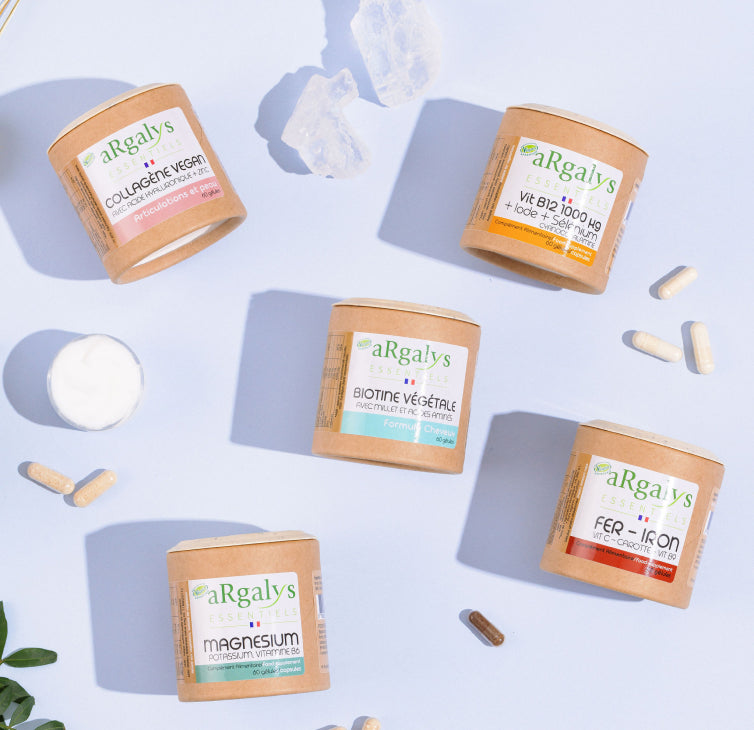
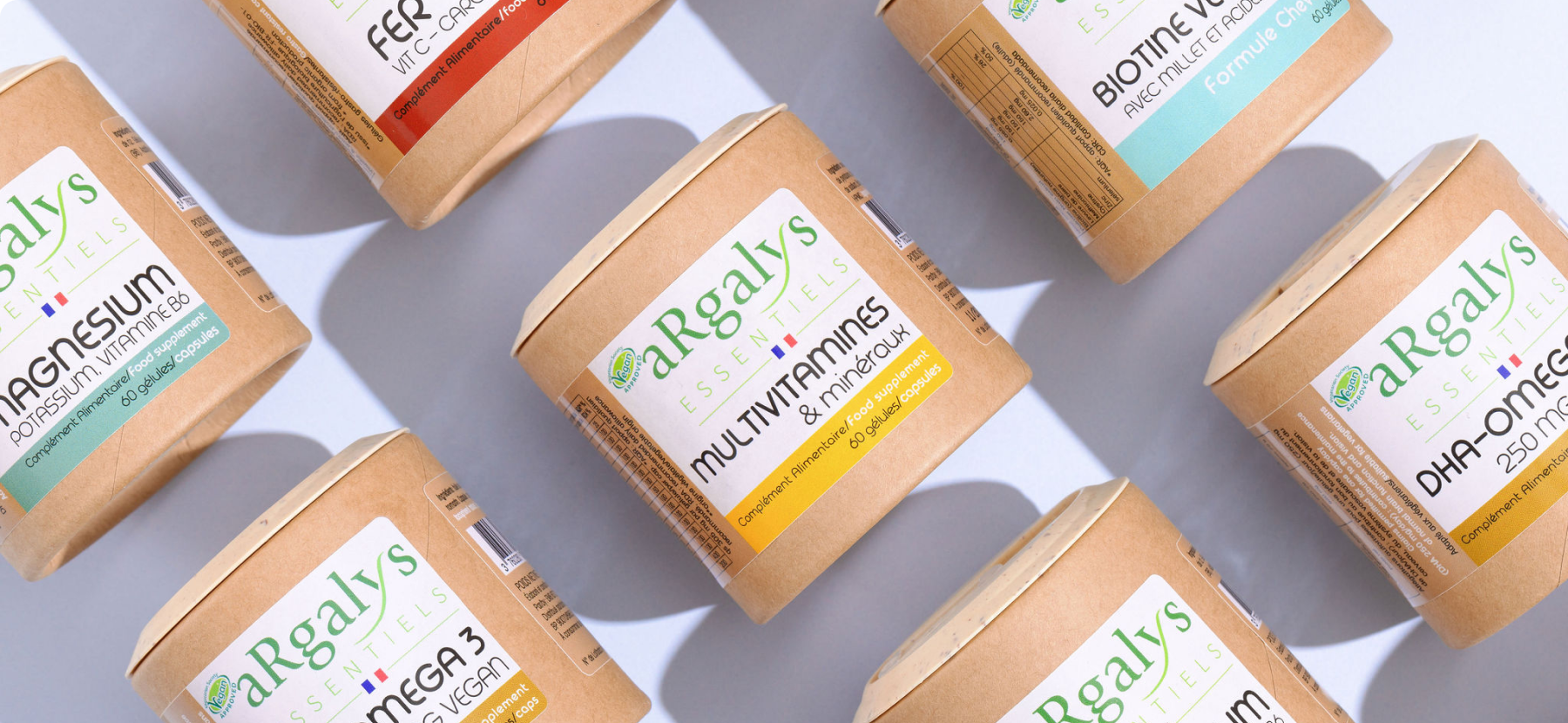
This is the extract we have included in our Argalys Menopause formula, combined with magnesium bisglycinate, L-theanine, fenugreek and vitamins B6, B12, D3 and E.
How should you take saffron during menopause?
Dose and duration are the two most important factors.
Clinical studies use doses of 15 to 30 mg per day of standardized extract, generally divided into one or two daily doses [3]. Taking it in the evening is often recommended for women looking to improve their sleep, given safranal's effects on neurons involved in sleep onset. Effects on mood and anxiety generally begin to appear after 4 to 6 weeks of regular use. Effects on sleep may be noticed sooner, sometimes within the first two weeks.
Saffron supplements are preferably taken with a meal to promote the absorption of fat-soluble compounds such as crocin. Saffron can be combined with magnesium bisglycinate and L-theanine without any known interactions, as they have complementary effects on nervous system balance and sleep.
What are the side effects of saffron?
Saffron has a very favorable tolerance profile at therapeutic doses.
At the doses used in dietary supplements (15 to 30 mg per day of extract), no serious adverse effects have been documented in the available clinical trials [3]. Mild digestive effects (nausea, dry mouth) have occasionally been reported in some studies. At very high doses (more than 5 g of raw saffron per day, far above therapeutic doses), toxic effects may occur — a situation that does not apply to standardized extracts used in nutraceutical supplements.
Saffron is not recommended during pregnancy at therapeutic doses because of its historically documented uterotonic effect. Its compatibility with anticoagulant treatments should be checked with a doctor.
What you need to know about saffron and menopause
Saffron is one of the best-documented plants for supporting emotional balance, sleep and certain menopause symptoms through a non-hormonal mechanism without phytoestrogens.
Its effectiveness depends directly on the quality of the extract used. A standardized saffron extract, preferably one that has been clinically evaluated such as Safr'Inside™, ensures a reproducible concentration of active compounds and results consistent with those documented in studies. Its effects are gradual and should be part of a comprehensive approach combining appropriate lifestyle habits, restorative sleep and targeted supplementation.
References
[1] Jolly Mama. Bienfaits Safran : Bien-être émotionnel, Ménopause & Post-partum. Disponible sur : jollymama.com. Tradition Nature. Synthèse des recherches récentes sur le safran. Août 2025.
[2] Tradition Nature, op. cit. [1]. Biodisponibilité crocine 18-22 % : études pharmacocinétiques récentes.
[3] Inolab. Safran et humeur : ce que la science dit vraiment sur ses effets. Mai 2026. Disponible sur : laboratoire-inolab.com. Delicure. Safran : études scientifiques et bienfaits prouvés. Juin 2026. Miumlab. Le safran : pourquoi cette épice fascine les chercheurs. Avril 2026.
[4] Lopresti AL, Smith SJ. The effects of a saffron extract (affron®) on menopausal symptoms in women during perimenopause: a randomised, double-blind, placebo-controlled study. Journal of Menopausal Medicine. 2021;27(2):66-78. doi:10.6118/jmm.21002. Vitabase. Relation : Ménopause et safran. Essai 28 mg/jour, 12 semaines.
[5] Compagnie des sens. Le Safran peut-il être utile au cours de la ménopause ? Données sur bouffées de chaleur et mécanisme ISRS. Tóth et al. 2018. Étude 56 femmes ménopausées, 15 mg matin et soir, 6 semaines.
[6] Activinside.com. Safr'Inside™ : extrait de safran breveté. Données sur cortisol, axe HPA, 10 fois plus de safranal. Juillet 2025. Ogaenics. Safr'Inside™ : ce que disent les études scientifiques. Avril 2026.
[7] Schuster J, Mundhenke C, Nordsieck H, Pouchieu C, Pourtau L, Hahn A. Effect of a saffron extract on sleep quality in adults with moderate insomnia: A decentralized, randomized, double-blind, placebo-controlled trial. Sleep Medicine: X. 2025;10:100147. doi:10.1016/j.sleepx.2025.100147