04 74 03 98 80







```html
Since entering menopause, you find yourself getting angry over small things that would not have affected you before. A lingering sense of worry sets in for no clear reason. Your tolerance threshold has dropped, and you no longer feel like yourself. These emotional changes, often experienced as a loss of control, have a specific biological explanation.
During menopause, hormonal changes directly disrupt brain chemistry. The resulting anxiety and irritability are not personality problems. They are symptoms linked to these hormonal changes, and there are ways to address them.
Does menopause affect your mood?
Yes, and the effect is direct.
The decline in estrogen production is one of the main characteristics of menopause.
Estrogen does not only regulate the menstrual cycle. It also acts as a neuromodulator in the brain, influencing the production, release and effectiveness of several neurotransmitters that are essential for emotional balance: serotonin, dopamine, norepinephrine and GABA [1]. When estrogen levels decline during menopause, these mood-regulating systems are disrupted simultaneously.
Between 15% and 50% of women going through menopause or postmenopause experience symptoms of anxiety, irritability or mild depression, according to a 2023 study [2]. These emotional symptoms are now recognized as part of the overall clinical picture of menopause, just like hot flashes.
Key takeaway: Mood disturbances during menopause have a documented neurobiological basis. They are not a psychological weakness, but a direct consequence of the disruption of brain neurotransmitters caused by estrogen deficiency.
Why does menopause cause anxiety and irritability?
Three distinct biological mechanisms simultaneously affect emotional balance.
Understanding them helps identify the right ways to take action.

Declining estrogen levels and neurotransmitter disruption
Estrogen is a key regulator of brain chemistry.
It stimulates the synthesis and uptake of serotonin, often referred to as the happiness hormone, which is essential for regulating mood and well-being. It also increases levels of dopamine, which is involved in motivation and pleasure, as well as norepinephrine, which regulates alertness and the stress response [1]. When estrogen levels decline, all three systems simultaneously lose this hormonal support. The brain becomes more reactive to negative emotions and less able to regulate them.
Declining progesterone levels further contribute to these imbalances.
Progesterone produces an active metabolite called allopregnanolone, which enhances the action of GABA, the brain's main inhibitory neurotransmitter. As its levels decline, inhibitory signaling in the brain is reduced, increasing nervous system excitability and contributing to anxiety, irritability and difficulty falling asleep [1].
Science fact: An editorial published in the Journal of Mid-Life Health (Garg & Munshi, 2025) confirms that estrogen has neuromodulatory effects on serotonergic, dopaminergic and GABAergic pathways in the brain, and that its decline during menopause directly disrupts mood regulation [3].
Increased cortisol: a vicious cycle
Cortisol can amplify mood disturbances during menopause.
Estrogen plays a protective role in the brain circuits involved in stress management. As estrogen levels decline, the central nervous system becomes more vulnerable to anxiety-inducing signals [2]. Spikes in cortisol, the stress hormone produced by the adrenal glands, can then become more pronounced. Cortisol reduces the effectiveness of serotonin and increases the reactivity of the amygdala, the brain structure involved in detecting threats.
This mechanism creates a vicious cycle.
The higher cortisol levels rise, the more likely the brain is to interpret neutral situations as threatening. As anxiety increases, cortisol levels rise further. Hot flashes, palpitations and night sweats can also activate the stress response by mimicking the physical signs of a panic attack [2].
Sleep disturbances as an aggravating factor
Poor sleep directly worsens emotional instability.
Sleep plays a fundamental role in emotional regulation. To put everyday events into perspective, the brain needs restorative sleep [4]. When sleep is fragmented by night sweats and declining progesterone levels, this regulation becomes less effective. Tolerance decreases, emotional reactions intensify and small everyday frustrations can feel disproportionately significant.
Sleep disturbances affect more than 50% of menopausal women and are one of the main factors that can worsen mood disturbances during this period [4].

What are the psychological effects of menopause?
The emotional effects of menopause can take many forms.
They can begin during perimenopause, sometimes well before periods stop, and can develop differently from one woman to another.
Irritability and mood swings
Irritability is often one of the first changes noticed during perimenopause.
It results from the simultaneous disruption of dopamine and serotonin, whose production can fluctuate unpredictably during perimenopause. These unpredictable hormonal changes can cause sudden mood swings, increased sensitivity to frustration and emotional reactions that women often describe as being unlike their usual personality [1]. Irritability generally becomes more pronounced when sleep is disrupted.
Anxiety and panic attacks
Anxiety during menopause can take several forms.
It often manifests as a persistent sense of worry, muscle tension, palpitations or chest tightness. In some cases, it develops into panic attacks, characterized by a sudden surge of adrenaline accompanied by a feeling of heat and a racing heart — symptoms that can be confused with intense hot flashes [2]. Women with a history of anxiety disorders are particularly vulnerable to this hormonal amplification.
A 2024 study indicates that one in five menopausal women is prescribed an SSRI antidepressant, often before hormone therapy is even evaluated [2].

Mild to moderate depression
Menopause doubles the risk of experiencing a depressive episode.
This vulnerability is linked to declining serotonin and dopamine levels, which are also pharmacological targets of antidepressants. Women affected may experience persistent sadness, loss of interest in activities they previously enjoyed and a sense of emotional exhaustion [5]. The distinction between mild depression and emotional instability caused by hormonal fluctuations can often be difficult to establish without medical assessment.
Science fact: Mauas et al. (2014), in Archives of Women's Mental Health, showed that irritability and personal vulnerability during the menopausal transition are independent predictors of the development of depressive symptoms [5].
How can you relieve menopause-related anxiety and irritability?
Several approaches can directly target the mechanisms involved.
They complement each other and can be more effective when combined.
Behavioral approaches
Stress management is one of the most accessible first steps.
Several calming practices can be considered: heart coherence breathing, meditation, yoga, breathing exercises, etc.
Cognitive behavioral therapy (CBT) is a well-documented non-drug approach for anxiety and irritability during menopause. It helps identify and modify thought patterns that contribute to the vicious cycle of anxiety, cortisol and insomnia [4].
Regular physical activity reduces cortisol, stimulates serotonin and improves sleep quality.
It simultaneously acts on all three mechanisms involved in menopause-related mood disturbances. Twenty to thirty minutes of moderate-intensity physical activity per day is enough to produce a measurable effect on anxiety and irritability [4].
Targeted micronutrition
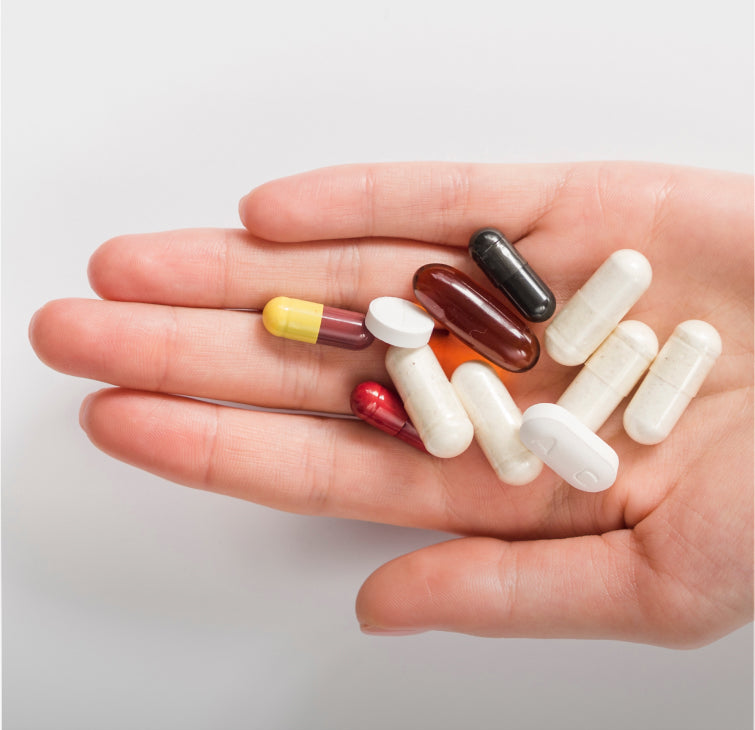
Certain micronutrients directly support neurotransmitters affected by hormonal changes.
Magnesium bisglycinate offers two complementary benefits. Magnesium is a cofactor in the synthesis of GABA and serotonin. Magnesium deficiency can directly amplify anxiety and irritability [4]. Glycine helps promote deep sleep.
L-theanine, an amino acid found in green tea, increases GABA and dopamine levels without causing sedation. It promotes a relaxed state that supports stress management and improves sleep quality, thereby acting on two of the three mechanisms identified [6]. Vitamins B6 and B12 contribute to serotonin and dopamine synthesis, and deficiencies are associated with worsening depressive and anxiety symptoms.
Saffron (Activ'Inside® extract) modulates serotonergic pathways and has shown positive effects on mood and anxiety in randomized clinical trials [6].
At Argalys, we have formulated a menopause supplement without phytohormones or any direct hormonal effect, combining magnesium bisglycinate, L-theanine, Activ'Inside® saffron and vitamins B6 and B12 to support nervous system and emotional balance throughout the menopausal transition.
When should you see a doctor?
Medical advice is necessary when you feel you can no longer manage the situation.
If anxiety or depressive symptoms persist for several weeks, interfere with your professional or personal life, or are accompanied by frequent panic attacks, you should consult a healthcare professional to determine an appropriate treatment strategy.
Several approaches can be considered. Today, one in five menopausal women is prescribed an antidepressant before hormone replacement therapy is even considered [2].
What you need to know about menopause and mood
Anxiety and irritability during menopause are associated with objective physiological changes.
They result from specific neurobiological disruptions: declining estrogen and progesterone levels, disruption of serotonin, dopamine and GABA, increased cortisol levels and fragmented sleep. These mechanisms reinforce one another, but there are ways to address them.
Behavioral approaches, physical activity, targeted micronutrition and, when necessary, medical support can all help restore a healthier emotional balance.
References
[1] ACD Nutrition. Œstrogènes, GABA et ménopause : mécanismes derrière l'anxiété et l'insomnie. Juin 2026. Disponible sur : acd-nutrition.ch. Unobravo. Effet de la ménopause et symptômes psychologiques. Juin 2025. Disponible sur : unobravo.com. Goldman Laboratories. Ménopause et anxiété. Juin 2026. Disponible sur : goldmanlaboratories.com
[2] Clarisse Ernoux. Anxiété à la ménopause : comment retrouver la sérénité naturellement ? Étude 2023 (15 à 50 % des femmes). Disponible sur : clarisse-ernoux.com. Bienvivrelamenopause.fr. Anxiété ménopause : 3 médicaments efficaces en 2026. Juin 2026. Données : 1 femme sur 5 sous ISRS.
[3] Garg R, Munshi A. Neuromodulatory effects of estrogens on serotonin, dopamine and GABA pathways. Journal of Mid-Life Health. 2025. Cité dans : Samphire Neuroscience. Menopause and Mental Health. Avril 2026.
[4] Goldman Laboratories. Dépression pendant la ménopause : solutions efficaces. Disponible sur : goldmanlaboratories.com. Pluchino N et al. Neurobiology of DHEA and effects on sexuality, mood, cognition and neurological diseases. Biochimie. 2011.
[5] Mauas V, Kopala-Sibley DC, Zuroff DC. Depressive symptoms in the transition to menopause: the roles of irritability, personality vulnerability, and self-regulation. Archives of Women's Mental Health. 2014;17:279-289.
[6] Moshfeghinia R, et al. Efficacy of L-theanine in various neuropsychiatric conditions: a systematic review of randomized controlled trials. Neuropsychiatr Dis Treat. 2024. Schuster J, et al. Effect of a saffron extract on sleep quality in adults with moderate insomnia. Sleep Medicine: X. 2025;10:100147. doi:10.1016/j.sleepx.2025.100147
```